The Day a Dollar Could Buy a Piece of Valrico
May 16, 2026
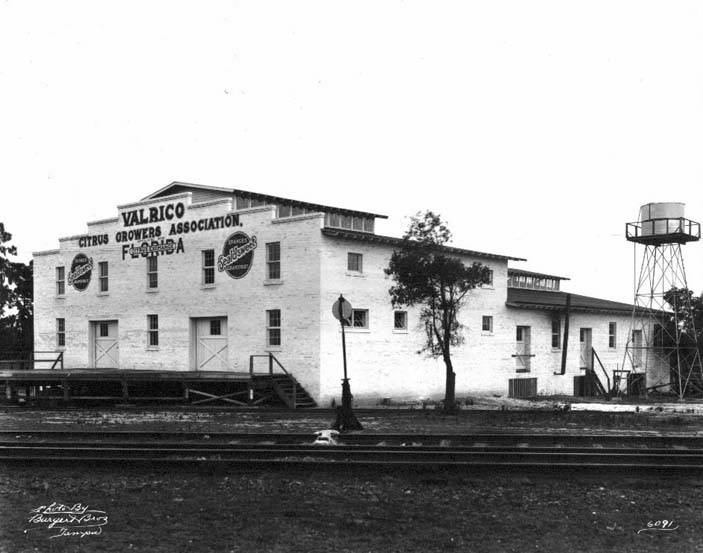 The Valrico Citrus Growers Association building alongside the railroad tracks, 1921. Two packing houses like this employed most of the area's residents into the 1940s. Courtesy, Tampa-Hillsborough County Public Library System.
The morning train pulls in
It's a Tuesday morning in October 1940. You step off the Seaboard Air Line train at the Valrico depot with a single dollar bill folded in your pocket.
The whole town is right here in front of you. Two citrus packing houses — Fugazzi out of Cincinnati and the Florida Citrus Exchange — both within shouting distance of the tracks. Porter Brothers general store. The civic center built from local brick back in 1916. About fifteen hundred people scattered across miles of citrus groves stretching east toward Plant City and south toward the Alafia.
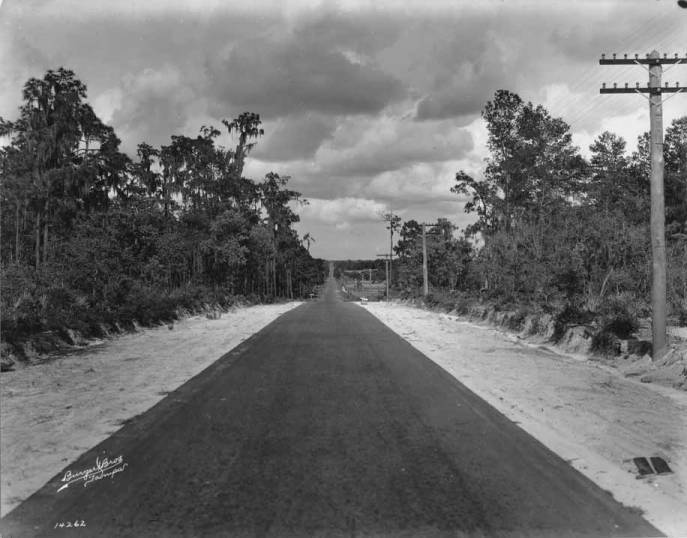 Valrico Road, 1925. By 1940 the road looked much the same — sand, shell, and citrus on either side. Courtesy, Tampa-Hillsborough County Public Library System.
State Road 60 isn't paved through to Tampa yet. That doesn't happen until the mid-1950s. The road you're standing on is sand and crushed shell. The drive to Tampa is rough enough that most folks just take the train.
And in your pocket is one dollar.
In 1940, that's real money. The average American worker pulls in about $1,368 a year. That's $25 a week. A citrus packing house worker in Valrico? Probably less.
But this dollar — this single piece of paper — is going to stretch farther than you'd believe.

Barrett Henry
REALTOR® | REMAX Collective
Buying or selling in Valrico? 23+ years of real estate experience.
Call (813) 733-7907Best Bay Services
Handyman & Home Services
Repairs, maintenance, and home prep for Valrico homeowners.
Call (813) 416-8676Walk with me
You head down the road to the Sanitary Store at the corner of Plant City Road and Valrico Road. There's a single gas pump out front. Inside, the shelves carry the basics — flour, sugar, lard, canned goods, dry goods, mail.
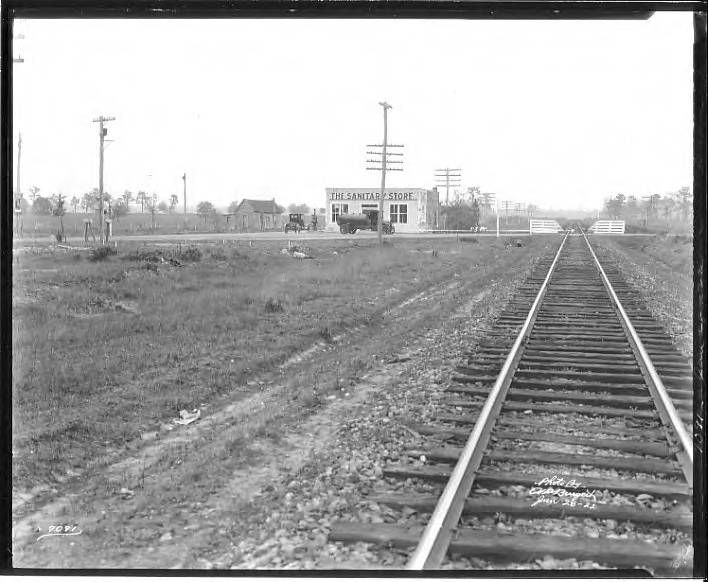 The Sanitary Store at the intersection of Plant City Road, Michigan Avenue, and Valrico Road, 1922 — one of the few places to buy anything in early Valrico. Courtesy, Tampa-Hillsborough County Public Library System.
Here's what your dollar buys you on this Tuesday morning:
Bread. Ten cents a loaf. You could carry home ten loaves of white bread for a dollar — or twelve if you shopped careful. Most folks just baked their own.
Eggs. Thirty cents a dozen at retail. Three dozen for your buck. But you don't pay retail. You've got hens out back. Half the families in Valrico do. The Kingsway Poultry Corporation runs an electric hatchery out by the old chicken farm — that's where the operation is.
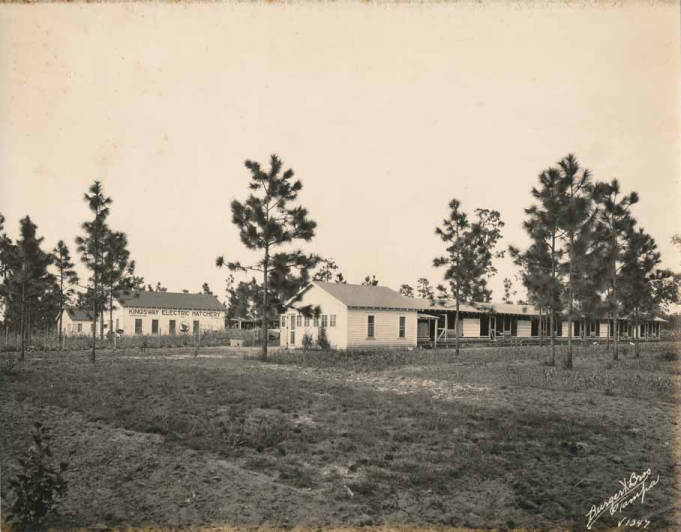 The Kingsway Electric Hatchery in Valrico, 1926. Many local families just kept chickens out back. Courtesy, Tampa-Hillsborough County Public Library System.
Gasoline. Fifteen cents a gallon. Six gallons fills the Model A clean up with change to spare. The pump out front of the Sanitary Store is the only one for miles.
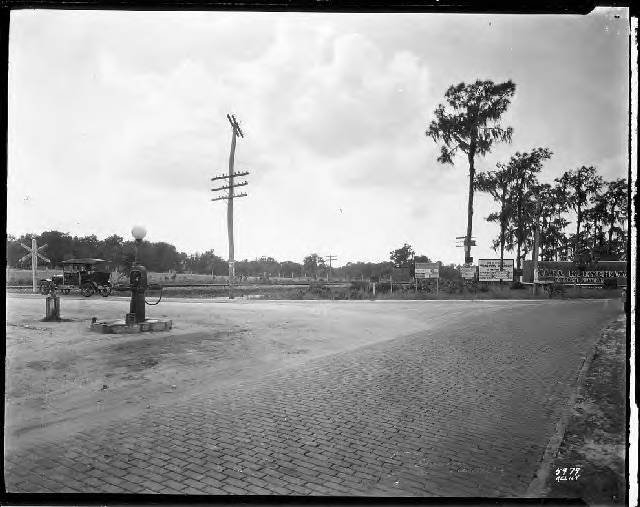 A single gas pump in front of the Sanitary Store at the railroad crossing in old Valrico, 1922. Gas was 15 cents a gallon. Courtesy, Tampa-Hillsborough County Public Library System.
A Hershey's bar. A nickel. Twenty of them for a dollar. The price didn't move for thirty years — Hershey kept it at five cents and just shrunk the bar when cocoa got expensive. A bottle of Coca-Cola? Also a nickel.
A movie ticket. Twenty-five cents at the picture show in Tampa. Four tickets for a buck. Take the whole family on Saturday night to see The Philadelphia Story or Disney's Pinocchio. Both came out that year.
A haircut and a shave. Fifty cents at the barbershop, and that often included the shave. Two haircuts for your dollar, change for a tip.
Postage. Three cents a stamp. Thirty-three letters home for a dollar. The 3-cent rate held all the way through to 1959. People still wrote letters.
So that's the morning. You've eaten, filled the truck, mailed the bills, gotten a trim, and you've still got money rolling around in your pocket.
Here's the part that'll mess with your head
You walk back past the citrus packing house. Maybe you work there yourself. Pickers and packers in 1940 Florida were making somewhere in the neighborhood of 25 to 35 cents an hour. Steady work in season, lean when the freeze comes. Call it $15 to $20 in a good week.
Now look across the road. There's a two-story house set back from the dirt road, ringed with Spanish moss and citrus trees. Wide porch. Tin roof. Modest, but solid.
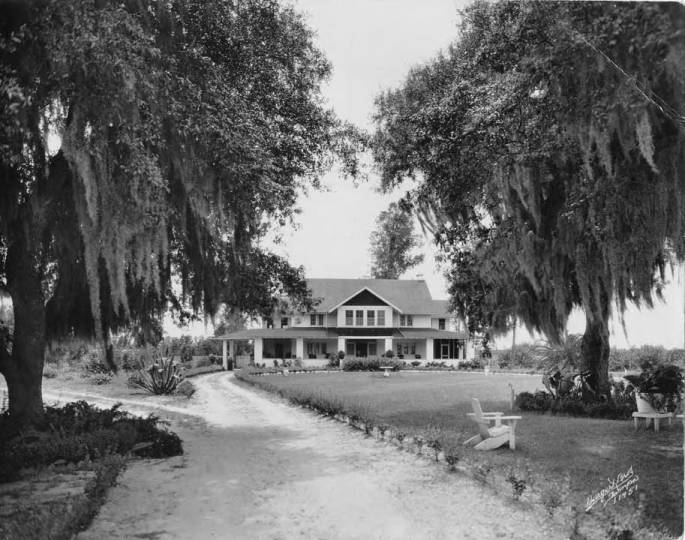 A Valrico home set in a citrus grove, 1924. In 1940, the median Florida home sold for $2,218. Courtesy, Tampa-Hillsborough County Public Library System.
That house? $2,218.
That's the median home value in Florida in 1940. Whole house. Whole grove around it.
If you're pulling $25 a week working the packing line, you're looking at less than two years of full wages — every penny of it, no expenses — to own that house outright.
Picked up the math? Your grandparents and great-grandparents in Valrico weren't living some impossibly luxurious life. Most of them were poor by any modern standard. The Depression hadn't fully let go. World War II was three months from pulling America in.
But land was cheap. Citrus pickers could buy houses. The dollar in your pocket was a meaningful slice of a real life.
What happened next
Then everything broke loose.
The packing houses ran hard through the war years. The 1944 hurricane tore through the area. The Florida Citrus Exchange and Fugazzi limped along, then folded. In 1957 the Valrico packing house burned down — there's an aerial photo of it still smoldering, taken from a Seaboard Air Line plane.
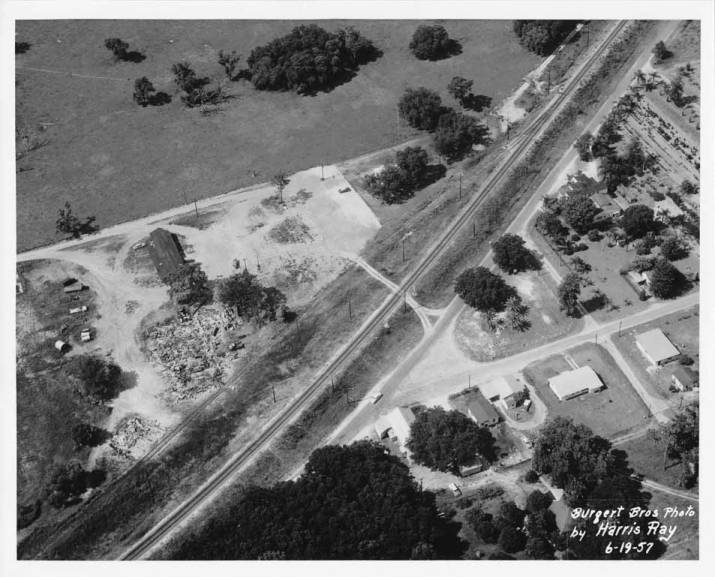 Aerial view of the burned Valrico packing house, 1957. The era of citrus Valrico was already winding down. Courtesy, Tampa-Hillsborough County Public Library System.
By the mid-1950s, State Road 60 finally got paved through to Adamo Drive in Tampa. The instant Tampa was a reachable commute, Valrico stopped being a citrus town and started being a suburb. People who'd never set foot in a grove started buying lots out here for their families.
Then came I-75 in 1986. Brandon exploded. Valrico's population — about 1,500 in 1945 — climbed past 6,500 by 1986. Today it's pushing 38,000.
And that two-story citrus-grove house worth $2,218 in 1940? The land underneath it is now worth somewhere north of $400,000.
The math your grandparents never knew they were doing
A dollar in 1940 has the purchasing power of about $23 today. Inflation alone explains a lot.
But inflation does not explain houses.
A $2,218 Florida home, inflation-adjusted, should be worth about $51,000 today. The actual median Hillsborough County home value? Around $380,000.
That's a seven-times multiplier on top of inflation. That's not the dollar losing value. That's the land doing work.
The patch of dirt under that 1940 grove house didn't get any bigger. The sun isn't shinier. The lake didn't get prettier. What changed is that Tampa got close. Then I-75 went in. Then a million people moved to Hillsborough County. Then the school district carved out Bloomingdale and FishHawk and the rest of it.
Every road, every school, every shopping center, every neighbor who moved here from Ohio added a little something to that dirt. And the people who happened to be sitting on that dirt — sometimes by sheer accident of where their grandparents took a job — caught the whole wave.
That's the lesson buried in 1940. The dollar didn't shrink. The land grew.
Whatever you own here is doing the same thing right now
If you own a home in Valrico, Brandon, Riverview, FishHawk, Lithia, or anywhere in this corner of Hillsborough County, that same machine is still running. New people are still moving here. Schools are still expanding. State Road 60 is still pulling traffic past your door. Brandon Auto Mall, the new Publix, the new neighborhood — every single one adds another small lift to your dirt.
You don't have to do anything for it to happen. You just have to own a piece of it.
The dollar isn't what it was in 1940. But land in Valrico isn't either.
Want to See What Your Slice Is Doing?
If you've owned your Valrico home for five years, ten years, twenty — there's a good chance the dirt under your feet has done more financial work than your job has. No pressure, no pitch. Just real numbers on what your house is worth today and what the same patch of Valrico did over the last several decades.
Barrett Henry — Broker Associate, REMAX Collective The NOW Team 📞 (813) 733-7907 ✉️ barrett@nowtb.com
Local insight from 23+ years of real estate experience — serving Valrico, Brandon, Riverview, and the rest of the Bay. No spam, no robo-calls, just a conversation when you're ready.
Sources: U.S. Bureau of Labor Statistics CPI Inflation Calculator; U.S. Census Bureau Historical Census of Housing Tables (1940 median Florida home value: $2,218); Hillsborough County Historical Resources (Valrico excerpts, USF Special Collections); National Archives 1940 Census records; Burgert Brothers Photographic Collection, Tampa-Hillsborough County Public Library System.
Historical photos in this post: Courtesy, Tampa-Hillsborough County Public Library System, Burgert Brothers Photographic Collection.

Barrett Henry
Broker Associate, REALTOR® | REMAX Collective
With over 23 years of real estate experience, Barrett helps buyers and sellers across Valrico and the Tampa Bay area. Straight talk. Smart strategy.
Sponsored by
Best Bay Services
Handyman & home services for Valrico homeowners.
More from Community
Valrico This Week — October 5, 2026
Your weekly roundup of what happened in Valrico this week — local news, community updates, and market observations.
Oct 5, 2026
Valrico This Week — September 28, 2026
Your weekly roundup of what happened in Valrico this week — local news, community updates, and market observations.
Sep 28, 2026
Valrico This Week — September 21, 2026
Your weekly roundup of what happened in Valrico this week — local news, community updates, and market observations.
Sep 21, 2026
Thinking about buying or selling in Valrico? Barrett Henry has 23+ years of real estate experience helping families find their next home. (813) 733-7907 · valricoagent.com
Discussion
Sign in to join the discussion.
Loading comments...